
Common pitch deck mistakes startups make!
Top 10 Pitch Deck Mistakes Startups
Must Avoid to Raise Funding
Learn how to improve your investor pitch, fix errors, and increase your chances of raising funding.
How it all works
Even strong startups lose investors due to avoidable pitch deck mistakes. Before diving in, here’s a simple 3-step framework to identify, fix, and strengthen your pitch for better fundraising outcomes.
1
Identify the Gaps
Audit your pitch deck for clarity, structure, and missing investor-critical elements.
2
Fix the Core Issues
3
Align for Investors
Ensure your story, traction, and financials clearly communicate scalability and ROI.
1. Clarity Gaps
Clarity gaps occur when your pitch deck fails to communicate the problem, solution, or value proposition in a simple and instantly understandable way. If an investor cannot grasp what you do within 3-5 seconds, interest drops immediately.
Our Process
Steps to Your Dream Outdoor Space
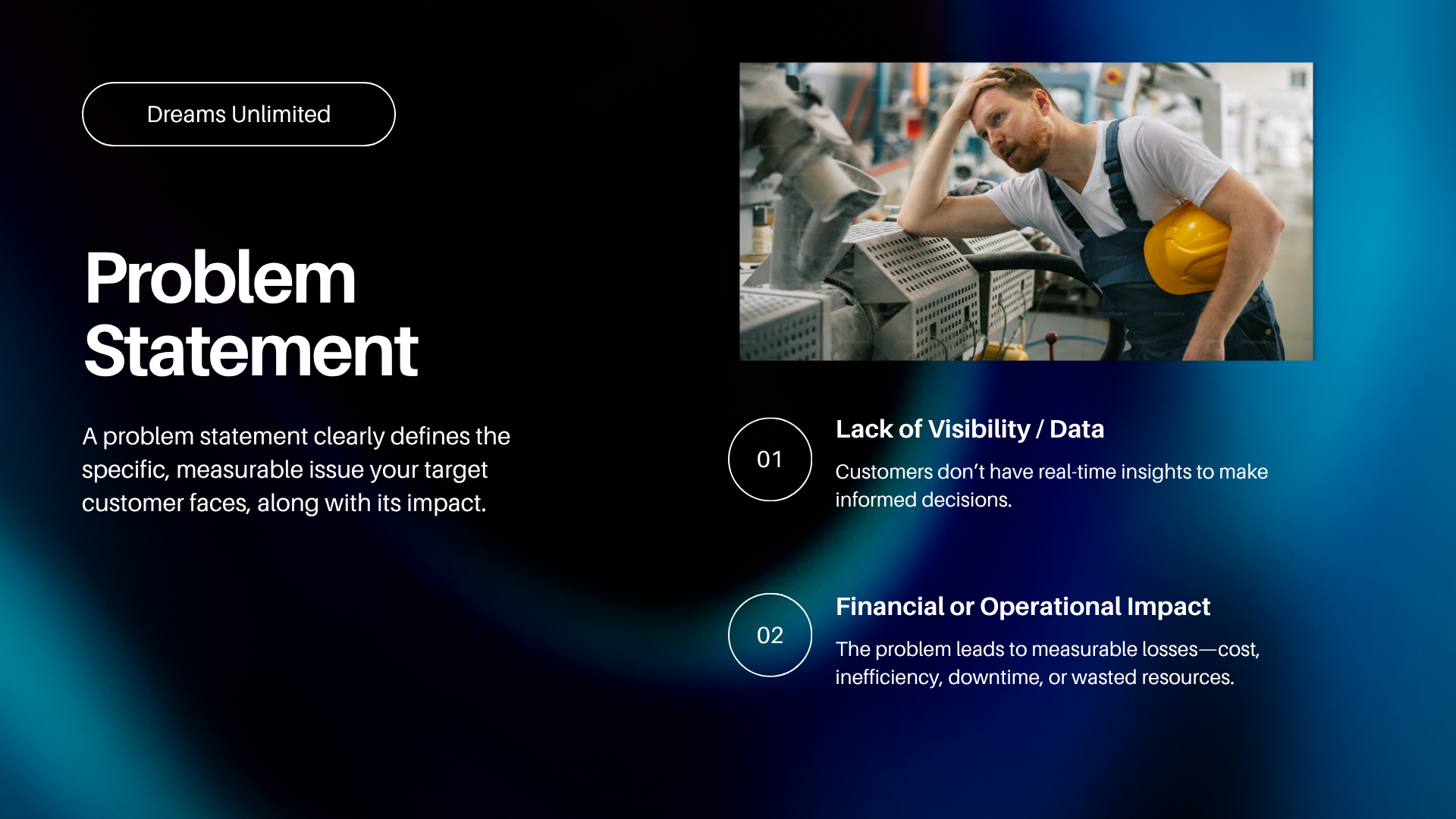
Wrong Problem Statement
Businesses struggle with managing operations efficiently
Right Problem Statement
Companies lose up to 20% efficiency due to lack of real-time visibility and downtime
3. Execute
Our skilled team transforms your space with precision and care.
2. Structural Gaps
Does your pitch deck follow a logical flow (problem → solution → traction → business model → ask)?
Structure gaps occur when your deck lacks a logical flow, making it hard for investors to follow your story from problem to solution to scale.
This is a Market Accepted Flow!
Problem – What is the core issue?
Solution – How are you solving it?
Market – How big is the opportunity (TAM/SAM/SOM)?
Product / Technology – What have you built?
Traction – Proof of ccustomers, revenue, growth
Business Model – How do you make money?
Go-To-Market (GTM) – How will you scale?
Competition – Why are you better/different?
Financials – Projections and key metrics
Team and ASK – Why you– Funding + use of funds
3. Missing Investor-Critical Elements
Are key sections like market size, traction, financials, and funding ask clearly defined?

GTM
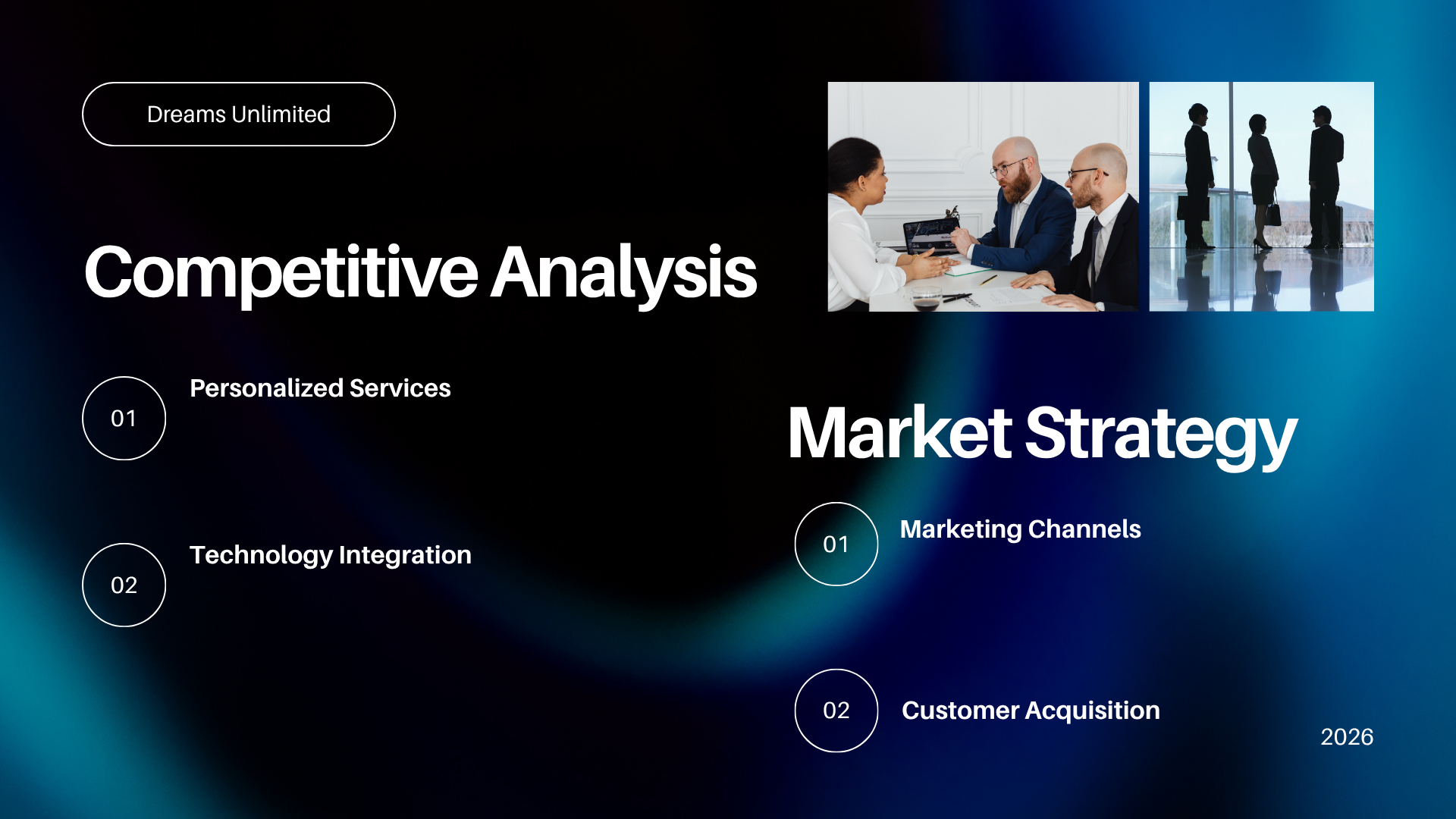
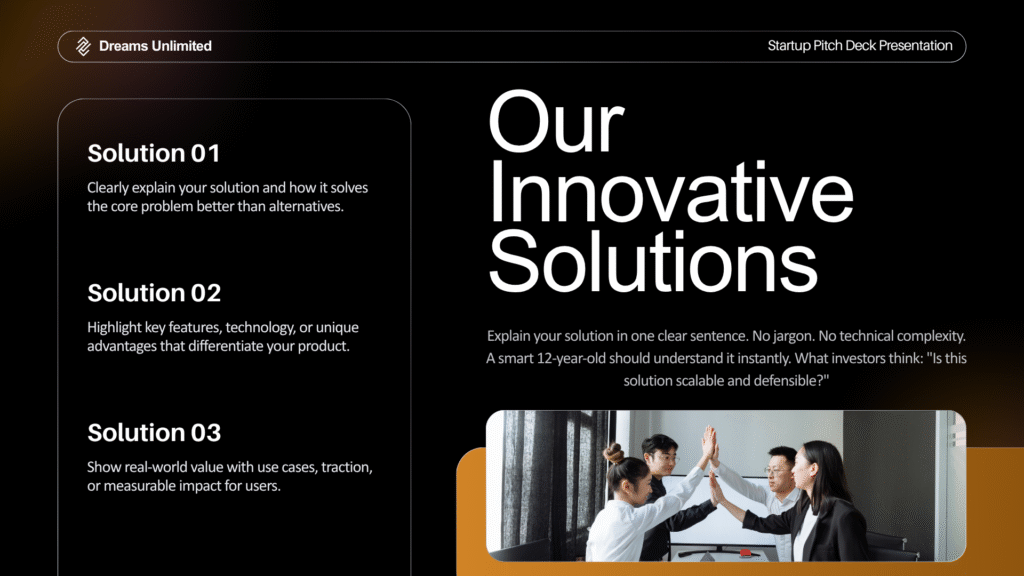
Go-To-Market Strategy
How you acquire customers and generate revenue—through the right audience, channels, and messaging. A strong GTM shows focus, traction, and a clear path to scalable growth.
Spotted Gaps in Your Pitch Deck?
Most founders miss these until investors point them out—fix them early.
If you’d like help, feel free to chat with an expert.
TAM, SAM & SOM
How to avoid overestimating total addressable market in tech startups
A credible TAM isn’t about how big the market could be—it’s about how much of it your product can realistically serve!
4. Over-inflating the market
Using broad industry numbers or aspirational percentages without grounding in target users or geography.
Hyper TAM –
2 billion people! How many people would actually use YouTube daily? Hint: not all 2B global internet users.
Investor Red Flag –
Numbers without grounding - Claiming everyone is a potential user makes your deck look like hype, not strategy.
Reality Check –
Bottom-up wins - Focus on reachable users: e.g., active YouTube users in Target regions × Engagement × Potential.
5. Product Timelines
Using broad industry numbers or aspirational percentages without grounding in target users or geography.
Over-promising dates
Claiming MVP or full launch in unrealistic timelines without accounting for development, testing, or regulatory hurdles.
Ignoring dependencies
Not factoring in tech, team bandwidth, or integration delays, which makes timelines look overly optimistic.
No roadmap visibility
Presenting vague timelines (“Q2 launch”) without clear milestones or deliverables—investors can’t gauge execution readiness.

6. Key Points for Product Description
Investors don’t care just about features; they care about value and impact. Here’s a crisp way to frame Product Description → Value for your deck:
1. What it does
Briefly describe the product functionality in simple terms—avoid jargon.
2. What problem it solves / value it delivers
Focus on outcomes: time saved, revenue gained, pain avoided, or convenience added.
3. Why it matters to users
Highlight the real benefit: faster workflow, easier decision-making, or improved lifestyle—something users actually care about.
Reduces manual reporting by 10 Hours
Increase sales by Q1
Supports 5x more users
7. Why Choose Us
Show Output-driven, investor-friendly “Why Choose Us”. Here are 4 sharp options:
Operational Cost Savings
Our Software/SaaS Solutions decreased process turnaround by 50% → operational cost savings of $300K/year
Reduced Manual Workload
Reduced manual workload by 60% → operational cost savings of $250K/year
Measurable ROI –
3–5x ROI powered by 50%+ gross margins and high customer lifetime value
Value-Led Adoption
Strong value proposition drives inbound demand and higher conversion rates
8. GTM -
Go-To-Market Strategy
A Go-To-Market (GTM) strategy defines how startups acquire customers and generate revenue through the right channels, target audience, and messaging. A strong GTM focuses on a clear Ideal Customer Profile (ICP), validated acquisition channels, and scalable growth tactics—while avoiding unfocused, “try everything” approaches that dilute results and investor confidence.
Common GTM Mistakes
1. “We’ll use all channels” strategy
No focus—trying ads, partnerships, outbound, inbound all at once.
2. No clear ICP (Ideal Customer Profile)
Targeting “everyone” instead of a specific, high-conversion segment.
3. No proven acquisition motion
No evidence of what actually works (no traction, experiments, or metrics).
9. Top DO's for GTM
Clear ICP
(Who exactly?)
Define a sharp target: industry, company size, persona
→ “We target SaaS companies with 50–200 employees (Head of Sales)”
Targetted (Locations)
Pick 1–2 proven channels, not everything
→ “70% inbound (SEO + content), 30% outbound (LinkedIn + email)”
Proven Traction (What works?)
Show early data or experiments
→ “CAC = $120, Conversion = 8%, 50 paying customers acquired”
10. Common Funding ASK Mistakes
01.
Vague Ask –
“We’re raising $X”
No clarity on why this amount or what it achieves.
02.
Milestone -
Linkage Missing
Funding not tied to clear outcomes (revenue, users, product stage).
03.
Unrealistic -
Valuation
Valuation not backed by traction, revenue, or market benchmarks
01
Solutions
Start with the Outcome
(Milestone-driven)
ASK – $10M to reach $5M ARR in 18 months
How?
- 40% Product → Ship & scale
- 30% GTM → Acquire customers
- 20% Team → Hire sales
- 10% Runway buffer →
02.
Work Backwards
(Capital needed)
Break down how much is required to hit that milestone:
→ Product + GTM + Team + Runway
Show it’s realistic:
→ CAC, LTV, burn rate, growth rate
Anchor valuation to traction, comps, and stage
→ Avoid random or inflated numbers
03.
Align
with Runway
Typically 18–24 months runway
→ Enough time to hit next valuation jump
ASK = Milestone goal → Capital required → Metrics-backed →
18–24 month runway
Show "Valid" Numbers That Build Investor Confidence
Some Numbers
Show Your Unit Economics
LTV (Customer Lifetime Value)
CAC (Customer Acquisition Cost)
Burn Rate (Monthly Spend)
Runway
(In Months)
Want to Fix Your Pitch Deck?
See how your deck stacks up—identify gaps in TAM, GTM, and investor messaging.
Resources to Build, Pitch, and Raise Successfully
Everything You Need to Raise Capital. Build Better. Pitch Smarter. Raise Faster.